πŸ“ž Call for a Free Quote: 888-619-5503

Rat Control in Columbus, OH

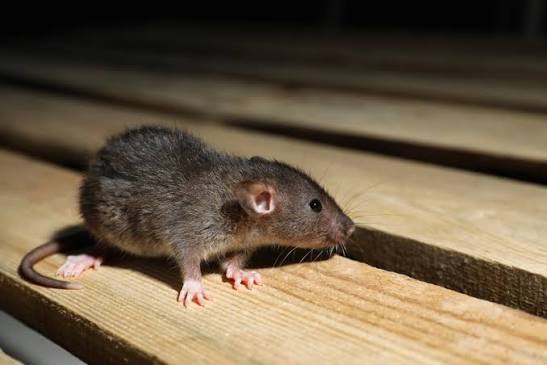
A rat on a wooden deck at night, the kind of Norway rat activity we trap and remove in Columbus, OH

Norway rats are the more common rat species we deal with in Columbus β€” burrowing rodents that nest along foundations, in crawl spaces, and near woodpiles or dense landscaping, and that readily move indoors once temperatures drop in fall. They're strong, persistent, and capable of gnawing through materials that would stop a mouse, which means rat problems tend to escalate faster if they're not addressed early.

We start with an inspection to identify rat activity β€” burrows along a foundation, gnaw marks, droppings, grease marks along baseboards where rats travel the same paths repeatedly β€” and to find how they're getting into the structure itself. Trapping removes the rats currently active on the property, using placement based on where we actually find activity rather than a generic setup.

Because rats are strong enough to widen an existing gap or exploit a weak point, exclusion is just as important as trapping β€” we identify and seal entry points using materials rats can't chew through, like heavy-gauge hardware cloth or metal flashing rather than standard caulk or foam alone.

Roof rats are far less common in Columbus than Norway rats, but they do turn up occasionally, especially in neighborhoods with heavy tree cover, dense ivy, or older multi-unit buildings β€” unlike Norway rats, roof rats are agile climbers that nest in attics, soffits, and dense vegetation above ground rather than burrowing at grade. Telling the two apart matters for where we focus an inspection: a ground-level burrow points to Norway rats, while gnawing and droppings found in an attic or along a roofline with no burrows nearby points toward roof rats instead.

πŸ“ž Call 888-619-5503

Request This Service

* Indicates required field

Signs of a Rat Problem

Burrows along foundations or under sheds, gnaw marks on wood or wiring, greasy rub marks along baseboards and beams where rats travel repeatedly, and droppings larger than a mouse's are the clearest signs. Rats are also more likely to be heard moving at night than seen directly, since they're naturally more cautious than mice.

Exclusion Materials That Actually Hold

Rats can chew through wood, soft plastic, and even some lower-grade foam sealants. We use heavy-gauge hardware cloth and metal flashing at entry points specifically because they hold up to a determined rat in a way standard caulk alone won't.

How a Rat Control Job Works, Start to Finish

Every rat job starts with the same free inspection β€” we walk the exterior perimeter, check crawl spaces and the attic, and look at interior areas where droppings or gnaw marks have been reported before setting a single trap. From there we place traps at confirmed activity points, usually along the same travel paths a rat has already been using, since a rat that already knows a route is far more likely to walk into a trap set on it than one placed at random. A typical job runs a few visits over one to two weeks: an initial visit to inspect and set traps, a follow-up to check catch and adjust placement, and a final visit once trapping shows a clear drop-off in activity to begin exclusion. Larger or older properties with multiple confirmed entry points can take longer, but we walk you through the expected timeline during the initial inspection rather than leaving it open-ended.

What Affects the Price of a Rat Control Job

The biggest factor in price is scope β€” trapping and removal alone costs less than a job that also includes full exclusion, since exclusion adds material and labor for every entry point we seal. The number of confirmed entry points matters too: a newer home with one or two utility gaps to seal is a smaller job than a century-old foundation with entry points at multiple corners of the house. Property size and how much crawl space or attic access is involved also factor in, since a harder-to-access attic or a larger perimeter simply takes more time to inspect and treat thoroughly. We give a written, upfront price after the free inspection, based on exactly what we find on your property, rather than a flat rate that doesn't account for how bad the actual problem is.

Reducing the Food and Shelter That Draw Rats In

Trapping and exclusion solve the immediate problem, but rats are drawn back to a property by the same things that attracted them in the first place β€” unsecured trash, pet food left outside overnight, birdseed that spills under a feeder, and dense woodpiles or overgrown landscaping close to the foundation. We'll point out the specific attractants we see on your property during the inspection, since a house that gets its entry points sealed but keeps an open compost pile or a woodpile stacked against the foundation is still inviting outdoor rat activity right up to where the exclusion work ends. None of this replaces trapping and sealing entry points, but it does make a real difference in how quickly a yard sees new outdoor rat pressure after a job is finished.

Rat Control vs. Mouse Control: Why We Don't Treat Them the Same

Rats and mice get lumped into one call for "rodent control," but the two require different trap sizing, placement, and exclusion materials β€” a snap trap sized for a mouse won't reliably catch a rat, and a gap sealed against a mouse with standard sealant won't necessarily hold up to a rat's stronger jaw and larger size. Rats are also more likely to burrow outdoors and travel established ground-level paths, while mice move more through wall voids and can squeeze through openings a rat could never fit into. Because the two species behave differently, we identify which one β€” or both β€” we're actually dealing with during the inspection rather than running a single generic rodent protocol, since a plan built for mice won't necessarily solve a rat problem and vice versa.

Our Warranty on Exclusion Work

We stand behind the entry points we seal as part of a rat job. If a rat gets back in through a point we've already sealed within the warranty period, we return and address it at no additional charge, since a resealed opening failing prematurely is on us to fix, not something you should have to pay for twice. This warranty covers the specific entry points we've sealed β€” it doesn't cover a brand-new gap that develops somewhere else on the property, which is a separate issue we'd assess and quote on its own. We'll go over exactly what's covered and for how long as part of your written estimate, so there's no ambiguity about what the warranty includes.

Licensed, Insured, and Trained on Ohio's Rat Species

We're licensed and insured to perform rodent control work in Ohio, and our technicians are trained specifically on the rat species found in the Columbus area β€” primarily Norway rats, with roof rats appearing occasionally in heavier tree cover β€” rather than treated as a generic pest species. Being insured matters in practice too: exclusion work sometimes involves working on rooflines, attics, or crawl spaces, and it protects you as the homeowner if anything is damaged in the course of the work. We're happy to provide proof of licensing and insurance before any work begins if you'd like to see it.

Rat Control FAQs

How can I tell if it's rats and not mice in my yard?

Rat burrows are noticeably bigger than a mouse hole β€” usually about 2-4 inches across, often at the base of a foundation, retaining wall, or woodpile β€” and rat droppings run closer to the size of a grain of rice or larger, versus a mouse dropping that's closer to a grain of rice split in half. Fresh burrow entrances also tend to look smooth and worn from repeated use rather than loose and undisturbed.

Do rat traps or bait stations work better outdoors?

For active outdoor rat activity we generally lean on trapping over bait, since a trapped rat gets removed the same visit while a baited rat can die somewhere inaccessible, like under a deck or inside a wall void, leading to an odor call later. Bait stations still have a place for ongoing exterior monitoring once the active population is under control.

If I see one rat, how many are actually on the property?

Norway rats are social and territorial, so one sighting almost always means more are present β€” a single burrow system commonly houses a small colony rather than one animal. That's part of why we inspect for burrow systems and travel paths rather than treating a sighting as an isolated incident.

Areas We Serve

Proudly providing rodent control across the region:

Get Rat Control in Columbus Today

Fast response, upfront pricing, and friendly local pros. Call now for a free quote.

πŸ“ž Call 888-619-5503